
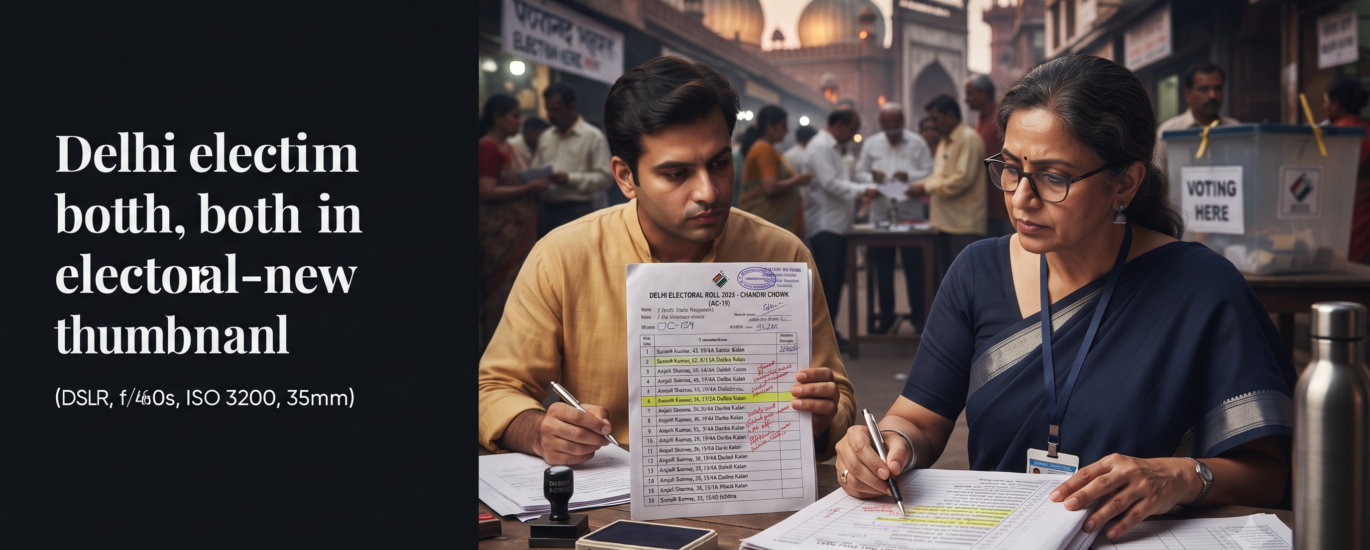
The ongoing Special Intensive Revision (SIR) of electoral rolls in Delhi has triggered a fresh political and legal controversy, with the Delhi Congress alleging that a large number of voter names have been deleted from electoral rolls at some polling booths in the Chandni Chowk Assembly constituency.
Delhi Congress president Devender Yadav said the party would strongly raise the issue and, if necessary, approach the courts. Congress workers have also been asked to assist eligible voters during the ongoing claims and objections process.
The development has brought renewed attention to voter rights, electoral roll verification and legal remedies available to citizens whose names are missing from the draft voter list.
What Is the Chandni Chowk SIR Voter Deletion Controversy?
According to the Delhi Congress, a significant number of names have allegedly disappeared from electoral rolls at certain booths in Chandni Chowk during the SIR exercise.
The allegation was raised during a training workshop for Congress booth-level agents, where party workers were briefed about the SIR procedure and ways to assist voters whose names do not appear in the draft electoral roll.
Importantly, the reported deletions are an allegation by the Congress, and individual cases would need to be examined through the electoral authorities’ claims, objections and verification process.
Congress Plans Door-to-Door Assistance
The Delhi Congress has said it will help eligible voters who find their names missing from the draft electoral roll.
According to the party, its workers will conduct door-to-door outreach and assist people during the claims and objections period. The party has also announced plans for voter assistance centres in locations such as slum clusters, RWA offices, village chaupals and major markets.
The focus, according to Congress, will include Dalits, minorities, residents of resettlement colonies, homeless people and other eligible voters who may face difficulties during the revision process.
Can Homeless People Vote?
One important issue raised during the discussion is the voting rights of people who do not have a permanent home or address.
AICC Delhi in-charge Qazi Nizamuddin said that being homeless or not having a permanent address does not by itself take away an eligible citizen’s right to vote. The broader legal principle is that electoral eligibility depends on the requirements of election law, rather than simply on whether a person owns or permanently occupies a house.
However, voters facing address or documentation issues should carefully follow the instructions issued by the Election Commission and the Delhi Chief Electoral Officer.
What Should You Do If Your Name Is Missing?
If an eligible voter’s name is not found in the draft electoral roll, the most important step is not to wait until the deadline.
For the current Delhi SIR process, eligible persons can seek inclusion through Form 6, along with the prescribed documents and declaration where applicable. The claims and objections window is scheduled to remain open until September 30, 2026.
Voters should:
- Check their name carefully in the draft electoral roll.
- Verify their constituency and polling station details.
- If the name is missing, check whether Form 6 is applicable.
- Keep the required supporting documents ready.
- Respond promptly if an official notice is received.
- Preserve acknowledgement or application details after submission.
- Follow the latest instructions issued by the Election Commission and Delhi CEO.
If the issue involves an existing entry that requires correction or certain changes, the appropriate electoral form may be different. Therefore, voters should verify their specific situation before filing an application.
Why Is the SIR Process Important?
The Special Intensive Revision is intended to update and verify electoral rolls so that eligible citizens are included while ineligible or duplicate entries can be identified.
Delhi’s draft electoral roll published on August 31 reportedly excluded around 47.7 lakh names from the earlier electoral population of approximately 1.45 crore, with the authorities providing a claims and objections mechanism for people seeking inclusion.
This makes the current claims period particularly important for voters.
The process is not simply a political issue; it directly concerns a citizen’s ability to participate in elections. Any eligible voter who believes their name has been wrongly omitted should use the official remedy available within the prescribed time.
Congress Says It May Approach the Courts
The Delhi Congress has indicated that it may pursue legal action if required over alleged voter deletions in Chandni Chowk.
This is not the first legal issue surrounding Delhi’s SIR process. The Delhi High Court recently dealt with a petition concerning the requirement that certain voters affected by the revision submit a declaration relating to first-time enrolment. The court did not entertain that petition in its existing form and directed that the issue be pursued as a Public Interest Litigation (PIL).
Any future legal challenge relating to Chandni Chowk would ultimately depend on the specific facts, evidence, electoral records and applicable legal provisions.
What Happens Next?
The immediate priority for affected voters is the claims and objections process.
The current schedule provides September 30, 2026 as the deadline for claims and objections, while the final electoral roll is scheduled for publication on November 4, 2026.
For voters, the message is simple: check your name, verify your details and act within the prescribed deadline if something is wrong.
For political parties and civil society groups, the Chandni Chowk allegations are likely to keep the spotlight on transparency, voter inclusion and the safeguards available during electoral-roll revision.
Legal Perspective: Why Voter Roll Accuracy Matters
An electoral roll is more than an administrative document. It determines whether an eligible citizen can exercise the constitutional and statutory framework governing the right to vote.
At the same time, electoral-roll revision must balance two objectives: ensuring that eligible voters are not wrongly excluded and ensuring that ineligible or duplicate entries do not remain on the rolls.
That is why the claims and objections mechanism is crucial. It provides an opportunity for voters to challenge omissions or inaccuracies before the final roll is prepared.
Citizens facing difficulties should rely on official electoral procedures and, where necessary, seek advice from a qualified legal professional rather than relying solely on political or social-media claims.
Final Word
The alleged voter deletions in Chandni Chowk have added another layer to the ongoing debate around Delhi SIR 2026 and voter rights. While the Congress has promised voter assistance and possible court action, the allegations still require verification through the electoral process.
For anyone whose name is missing from the draft roll, the most important step is to use the available claims and objections mechanism before the September 30 deadline.
At Legal Drishti, our aim is to make important legal and civic developments easier to understand, while keeping the distinction clear between reported allegations, official positions and established legal facts.
SEO package
Primary keyword: Delhi SIR voter deletion Chandni Chowk
Secondary keywords:
- Delhi SIR 2026
- Chandni Chowk voter list
- voter name deleted from electoral roll
- Delhi electoral roll revision
- Form 6 Delhi voter list
- voter rights during SIR
- Delhi Congress SIR
- electoral roll legal action
- claims and objections SIR
- Delhi voter list 2026
Suggested SEO title:
Delhi SIR 2026: Congress Alleges Voter Deletions in Chandni Chowk, Plans Legal Action
Meta description:
Delhi SIR 2026: Congress alleges voter deletions in Chandni Chowk and plans legal action. Know the voter claims process, Form 6 and key deadlines.
Backlink-friendly anchor ideas:
- voter rights and legal remedies
- how to check your name in the electoral roll
- Form 6 voter registration process
- Delhi SIR 2026 latest updates
- legal information on electoral roll disputes